

Security cameras require testing in a wide range of light levels. They must adapt from daylight to light as low as 0.0001 lux, which might occur in the worst overcast night. They must also resolve detail in mixed lighting conditions that demand high dynamic range performance. Imatest solutions will help you objectively test your camera’s performance to prove that they perform in the most extreme environments.
Image Quality for Security Cameras
With the increasing use of security cameras, including tremendous growth in the consumer market, competition amongst camera companies is rising, so producing the best quality image is paramount.
Image quality factors particularly important for security cameras include:

Light Sources for Security Cameras
We offer uniform light sources and reflective lighting which allows you to reproduce a broad range of illuminants and light levels.
Our most popular light sources for security cameras are:
- Imatest LED Lightbox (Transmissive)
- Gamma Scientific RS-9 (Transmissive)
- Kino Flo Freestyle 31 (Reflective)
It is critical to test your security camera in low-light conditions. To increase the ability to test we offer a Low-Light Filter.

Wide Field-of-View Test Equipment
Effectively testing wide field-of-view (FoV) lenses, and correcting properly for distortion can be a challenge. Our pre-distorted charts and ultra-wide FoV test equipment will help you overcome the challenges and simplify your testing process. Pre-distorted charts will correct FoV up to 160º. For FoV wider than 170º, use our ultra-wide test fixture.

Test Charts for Security Cameras
We offer a suite of test targets to analyze the image quality factors most important for security cameras. We produce our targets on reflective and transmissive substrates.
The targets that are most applicable to testing security cameras are:

Standards for Security Cameras

Image Information Metrics
More and more security cameras feed video analytics: machine vision and AI algorithms that detect, recognize and identify people, vehicles and objects. Those algorithms operate on information, not pixels, so sharpness and noise alone are incomplete measures of how well a camera serves them.
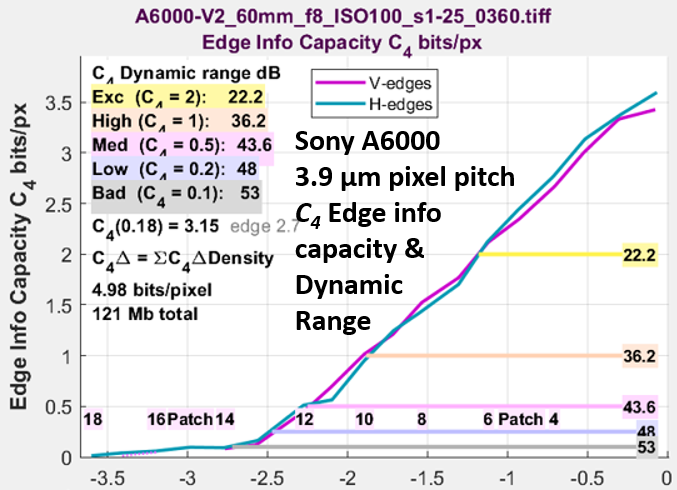
Image information metrics, derived from Shannon’s information theory, are far more predictive of machine vision performance. They are measured from standard slanted-edge test images (the ISO 12233 4:1 contrast is recommended), and include:
- Information capacity (C): a camera’s potential performance, in bits per pixel or per image. Measured over a wide range of illumination with the InfoDR chart, it gives an information-based dynamic range and low-light performance, the conditions security cameras face from daylight to night.
- Ideal observer SNR (SNRi): how detectable an object is.
- Object detection error probability (ODEP): derived from SNRi, it correlates with how well an object can be detected for a defined task: detection, recognition or identification.
Let's work together
Not sure what you need? Talk to an expert.
Our experts are always standing by to answer any questions and make sure that you have the right solution for your unique testing needs.