

Reflective Lighting is a key capability offered by Imatest. The majority of image quality testing is accomplished with reflective test charts. Even, glare-free illumination is essential for achieving accurate, repeatable measurements. See our lab assembly guide for placement instructions. Depending on your needs, we offer the following solutions:

Kinoflo Freestyle LED
Dimensions
- Two 102x28x9cm (40x11x3.5") fixtures
- 3.6 : 1 aspect ratio
Illuminants
- Variable LED from 3200K - 6500K
- White mode & Color Mode
Color Temperature
- Full range of adjustable temperature
- Kelvin presets 2700K-6500K
- Extended color range 2500K-9900K
Light output
- At 1.5 meters distance, provides between 5.1 and 2200 Lux Illumination at 5000K
- A 430:1 ratio of output levels.
- Effectively increases the output ratio to 35,000:1
Uniformity
- 40" x 60" reflective chart area: uniformity >80%.
- Smaller reflective chart area: uniformity >90%.
Barn Doors
- 6.5" barn doors
Controls
- Full range onboard and DMX dimming
- DMX wireless link (Lumen Radio®)
- DMX Auto Terminate

Metaphase NIR ExoLight 2.0
Dimensions
- Two 94 x 8 x 7cm bars
Illuminants
- NIR LED
Color Temperature
- 850nm or 940nm
Light output
- Up to 4000ma
Uniformity
- 40" x 60" reflective chart area: uniformity >80%.
- Smaller reflective chart area: uniformity >90%.
Barn Doors
- Not included
Controls
- ULC-2 Controller included

Thouslite LEDCube
Dimensions
- 30x30x21cm cubes mounted (optional)
- on 62 x 50 x 187cm fixtures (up to 3 cubes per fixture)
Illuminants
- Tunable LED
Color Temperature
- CCT: 2000~20000K
Light output
- D65: At 1 meter distance, provides 850 Lux Illumination
- D50: At 1 meter, provides 1250 Lux Illumination
- Multiple LED lights can achieve higher intensity.
Uniformity
- 40" x 60" reflective chart area: uniformity >80%.
- Smaller reflective chart area: uniformity >90%.
Barn Doors
- Not included
Controls
- Wired/wireless control via LED Navigator software, touch screen control box, or USB cable.
Qualities of Reflective Lighting
Dimensions
Tall lights that are vertically mounted work best. The aspect ratio of your lighting system will affect uniformity. Vertical orientation will keep light levels consistent from the bottom to the top of the test chart.
Illuminants
Different kinds of light sources have different spectral distributions. While the world switches over to LED lighting, a comprehensive test plan will include testing under fluorescent and incandescent illuminants. CIE Standard illuminants are defined by their spectral power distribution. Standard illuminants provide a basis for comparing images or colors recorded under specific lighting conditions. LED and fluorescent bulbs approximate the actual CIE illuminants, but contain much less near-infrared (NIR; >730nm) energy than actual daylight. For silicon-sensor cameras with near-infrared cutoff filters this is less of a concern.
Color Temperature
Color temperature is defined by the Kelvin (K) value of ideal blackbody radiation. Color temperatures over 5000 K appear cool, or bluish white. Lower color temperatures (2700–3000K) appear warm, or yellowish white through red.
Light Output
The range of Illuminance range can be characterized by the maximum and minimum lux values that a lighting system can produce on a target at a specified distance using a particular illuminant. Dimming ratio is an indicator of how wide a range of conditions you can simulate in your lab. The practical light intensity will depend on the specific test environment and light system configuration. Enabling multiple illuminants, moving the lights closer and multi-light configurations can yield significantly brighter levels. Adding neutral density filters can yield much lower light levels. Please contact us for more details and advanced configurations.
Uniformity
Uniformity is defined by the variation of light intensity across the target area. There should be a luminaire placed on either side of the camera to avoid reflections on the chart and so that the falloff in light level from one light aligns with the increase in light level from the other light. Use a light meter to check for the evenness of lighting. ±20% over the entire target is sufficient for SFR and Distortion measurements. ±5% or better should be the goal for tonal and color measurements (Stepchart, Colorcheck, and Multicharts). Lighting uniformity is strongly affected by the distance and orientation of the lamps.
Barn Doors
Barn doors shape the beam of light from the fixture, and prevent scattering light from spilling directly into the lens of your imaging system. Barn doors reduce glare, creating more reliable image quality measurements.
Controls
Lighting systems with automatic control allows for quickly repeatable testing procedures. Eliminating manual tuning of lighting conditions will increase the productivity of camera testing development.
Reflective Systems
-
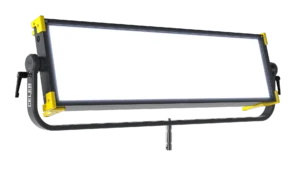
Kino Flo Celeb IKON 12
$21,900.00Add to cart -
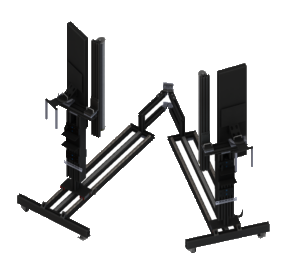
Imatest MTS Reflective Module
Price range: $7,600.00 through $10,210.00Select options This product has multiple variants. The options may be chosen on the product page -
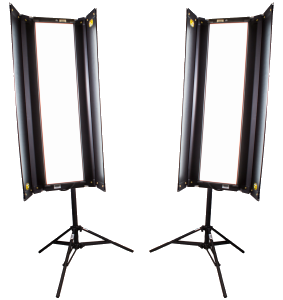
Kino Flo LED DMX Lighting Systems
Price range: $10,470.00 through $12,260.00Select options This product has multiple variants. The options may be chosen on the product page -
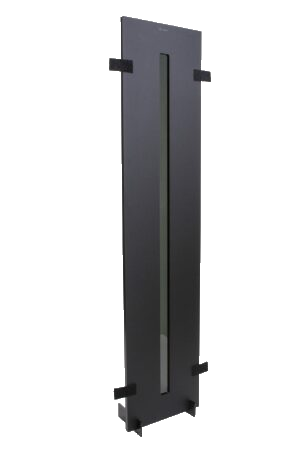
Imatest Low-Light Filter for the Kino Flo FreeStyle 31
$1,260.00Add to cart -
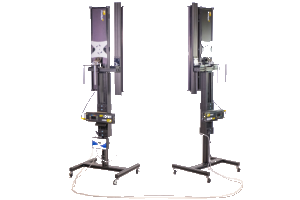
Imatest Light Stands
Price range: $5,400.00 through $7,400.00Select options This product has multiple variants. The options may be chosen on the product page -

Metaphase NIR ExoLight v2.0 (Set of 2)
Price range: $12,800.00 through $15,900.00Select options This product has multiple variants. The options may be chosen on the product page -
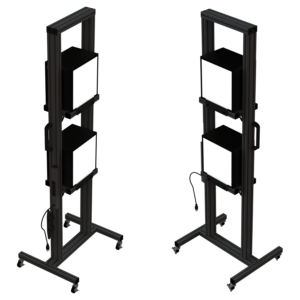
Thouslite LEDCube & Fixture
Price range: $600.00 through $11,200.00View products -

Imatest Jeti Specbos 1211-2 Mount
$200.00Add to cart -
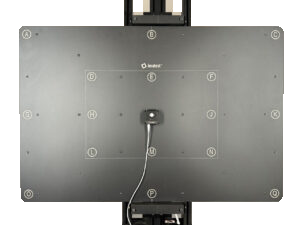
Imatest Sensor Plate
$1,700.00Select options
Let's work together
Need help designing your test lab?
Tell us about your cameras, your test charts and the space you have, and our imaging scientists will help you choose the lighting system that gives you even, glare-free illumination at the light levels and color temperatures your testing needs.