


- This event has passed.
EI2026 Short Course: Camera Simulation for Predicting Information Metrics and Machine Vision Performance
Instructor: Norman L. Koren
When: Sunday, March 1st 2:00 PM – 5:00 PM PST
Benefits:
- Understand the fundamentals of information capacity and how it relates to conventional SFR and noise measurements,
- Understand the information metrics (information capacity and others derived from information theory), and learn how they relate to system performance,
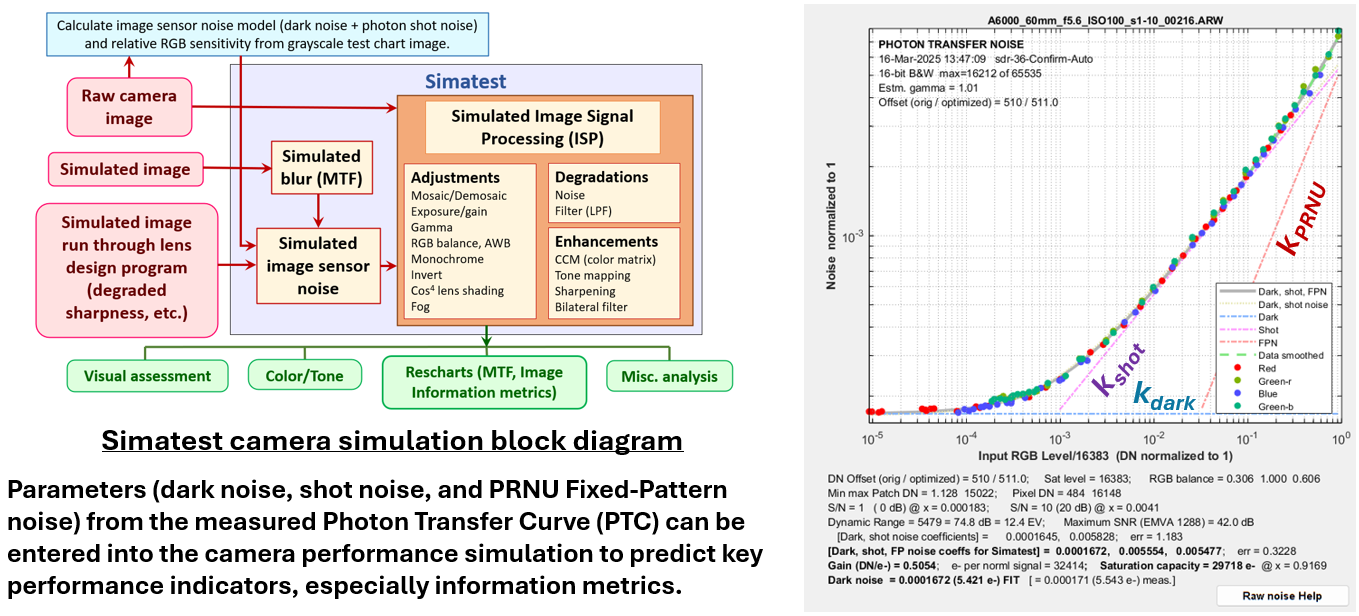
- Learn the fundamentals of camera system simulation, including preparing the image (typically a test chart), determining the lens degradations, image sensor noise model, and Image Signal Processing (ISP),
- Learn how to determine the effects of each system component or image processing step on the system performance.
Course description:
This course introduces the basics of information theory, shows why the key information metrics (information capacity and SNRi) are superior to traditional metrics such as sharpness (SFR) and noise for characterizing camera performance, then show how to calculate them from test chart images.
Next, the course describes the camera performance simulator, including
- Creating input images (usually test targets),
- Simulating lens degradations,
- Modeling the image sensor noise and ISP (Image Signal Processing),
- Displaying results, including the standard performance metrics and new information metrics.
This course will discuss C4, the information capacity measured directly from ISO 12233-compliant 4:1 contrast slanted edges, and show how it can characterize performance over a range of illumination. Finally, it includes a discussion work to correlate information metrics with machine vision performance.
Intended Audience: Engineers who are tasked with designing camera systems for a variety of applications, often in the automotive and medical industries. They typically have degrees in sciences such as physics or in electrical or mechanical engineering, but may be new to image science. Ideally, they should have some experience in imaging system design, though the course will accommodate beginners with limited engineering experience.
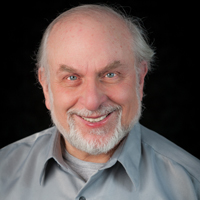
Norman Koren became interested in photography while growing up near the George Eastman Museum in Rochester, NY. He received his BA in physics from Brown University (1965) and his masters in physics from Wayne State University (1969), then worked in the computer storage industry simulating digital magnetic recording systems and channels for disk and tape drives from 1967-2001. He founded Imatest LLC in 2003 to develop software and test charts to measure the quality of digital imaging systems.
EI2026 Details Registration